

The Day Everything Changed: How Apple's 'Behind' AI Strategy Was Actually Genius
October 2026: The keynote that rewrote AI history and proved the critics catastrophically wrong

The iPhone slipped from Tim Cook's fingers.

For a heartbeat, recorded in crystalline 4K by dozens of cameras, the device hung suspended above the Steve Jobs Theatre stage. October 15th, 2026. The same stage where Cook had announced countless iterations of familiar excellence, where Apple had perfected the art of revolutionary revelation. But this moment felt different.
Cook's reflexes caught the phone before it hit the ground, and in that instant of perfectly choreographed vulnerability (though knowing Apple, probably rehearsed fifty times), something shifted in the room's energy.
"Clumsy of me," Cook said, that familiar half-smile playing across his face as he held up the device. "Though perhaps fitting. For three years, you've watched us seemingly fumble our way through AI." The massive screen behind him erupted with headlines: Bloomberg: Apple Still Hasn't Cracked AI. Fortune: Tim Cook's AI Struggles. TechCrunch: Why Apple is Losing the AI Race.
In the front rows, the very journalists who'd authored those stories shifted uncomfortably in their seats. The air conditioning hummed. Someone's phone buzzed (ironic, given what was about to unfold).
Cook's voice dropped to barely above a whisper, forcing the entire auditorium to lean forward: "Today, I want to show you what we've really been building while you thought we were behind."
The iPhone in his palm began to pulse with a soft, almost organic light that seemed to breathe with the rhythm of his heartbeat.
What happened next rewrote the rules of human-computer interaction.
No apps opened. No "Hey Siri" commands. No frantic typing or swiping. Cook simply glanced at his calendar, a micro-gesture barely perceptible to the audience, and the device anticipated his concern about a scheduling conflict three meetings deep before his conscious mind had even processed the visual information. As his eyes drifted toward his messages (a movement so subtle it would require slow-motion replay to catch), responses began composing themselves, matching his words and capturing his relationship dynamics, his communication patterns, his emotional undertones with each contact.
"This is Apple Foundation," Cook announced as gasps rippled through the audience. "The first AI that doesn't just process your requests. It understands your intentions before you do."
He paused, that familiar Cook smile crossing his face. "Thirteen months ago, when we introduced live translation in AirPods, you saw a feature. We saw the first glimpse of Apple Foundation going public."
On the massive screen, lines of code flowed past, but these weren't API calls to distant servers. Every calculation, every prediction, every moment of apparent magic was happening entirely on the device in Cook's hand.
"The industry focused on AI that learns from millions of users," Cook's voice gained intensity. "We chose a different path: AI that learns from just one. You." He paused. "Scale became less important than intimacy. Data extraction became less valuable than human dignity."
The room erupted. This wasn't the usual polite Apple applause but the sound of an entire industry realising they'd been watching the wrong game.
The Realisation That Rewrote History
Within minutes, tech XTwitter exploded. The carefully constructed narrative of Apple's AI struggles didn't just crumble, it inverted entirely. Every "behind" headline became evidence of perhaps the most successful strategic misdirection in Silicon Valley history.
Ben Thompson of Stratechery, who'd spent months crafting detailed analyses of Apple's "AI problem" (including some rather confident predictions about their inevitable irrelevance), published a real-time update: "I need to fundamentally revise everything. They weren't behind; they were building a completely different future."
On Bloomberg's live stream, analyst Gene Munster sat in stunned silence as Cook demonstrated features that redefined AI capabilities. The system anticipated needs, resolved conflicts, and coordinated complex tasks across every aspect of digital life, all while maintaining the privacy infrastructure Apple had spent years perfecting.
The stock market reacted immediately. Apple gained $300 billion in market cap in after-hours trading. But more tellingly, Google, Microsoft, and OpenAI all saw their shares tumble as investors grappled with a new reality: the AI race hadn't been won by the fastest runner, but by the one taking a fundamentally different route.
Wall Street analysts who'd spent 2024 and 2025 crafting elaborate theories about Apple's AI struggles were suddenly scrambling to understand how they'd missed something this significant. The "behind" narrative didn't just prove to be wrong... it proved to be completely inverted. Apple had been playing an entirely different game, not catch-up.
But this wasn't unprecedented. As the initial shock subsided and technology historians began examining the timeline, a familiar pattern emerged. One that transformed what seemed like strategic failure into evidence of systematic genius.
The Pattern Recognition Masterclass
As technology journalists began reconstructing the timeline, a familiar pattern emerged. One that revealed Apple's misdirection as both strategic genius and historical inevitability.
This marked the third time in four decades that Apple had been declared "dead" or "hopelessly behind," only to emerge with innovations that caught up and then redefined entire categories:
December 1983: Personal computing belonged to IBM and Microsoft. Apple was dying, declared obsolete by the rise of IBM-compatible PCs. Critics focused on market share and enterprise adoption while missing Apple's parallel universe development. Then January 1984: the Macintosh and its revolutionary graphical interface. Suddenly, every computer company scrambled to build "windows" and "mouse" systems. The command line became primitive overnight.
2006: The smartphone kingdom belonged to BlackBerry. Enterprise users demanded physical keyboards; consumer phones remained toys. Apple had never built a phone. Surely telecommunications required different DNA than computers? (Spoiler: it didn't.) Then January 2007: the iPhone. Within five years, BlackBerry became a cautionary tale, and every phone became a touchscreen rectangle.
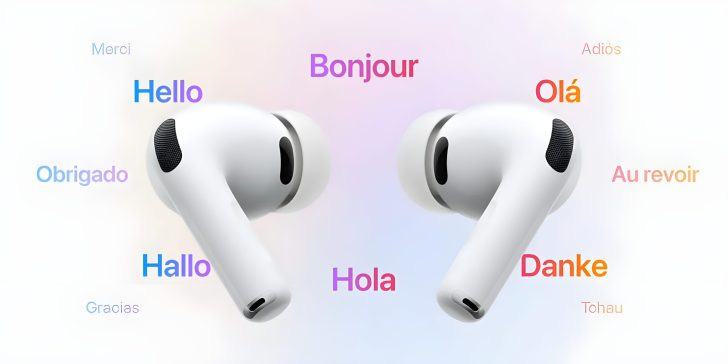
2024-2026: The AI race belonged to OpenAI, Google, and Microsoft. Cloud-based models with billions of parameters dominated headlines and venture capital conversations. Apple seemed slow, conservative, obsessively focused on privacy when the "real action" lay in raw computational power and data harvesting. But September 2025 offered the first glimpse: AirPods translation launched as seemingly just another feature. Critics called it "nice" while completely missing that they were witnessing the first public demonstration of Apple Foundation's architecture. Genuinely revolutionary AI working entirely on-device. Everyone saw the feature; nobody recognised the manifesto.
The Strategic Misdirection Dissected
Every criticism had actually been evidence of perfectly executed strategic deception:
The "Siri Problem" (2023-2024): Competitors launched increasingly sophisticated chatbots that required server farms and privacy compromises. Apple's Siri remained embarrassingly basic. Critics interpreted this as technological limitation. Reality: Apple was rebuilding Siri's entire architecture around on-device processing, constructing the foundation for truly private AI that could access patterns no cloud system could safely examine.
The "Parameter Count Gap" (2024-2025): OpenAI and Google raced toward models with trillions of parameters, dominating AI conferences with computational dick-measuring contests (though admittedly, watching grown adults argue about parameter counts does have a certain absurdist charm). Apple's models remained smaller, seemingly less capable. What critics missed: Apple was perfecting techniques for running sophisticated AI entirely on mobile processors, transforming every iPhone into a personal AI supercomputer rather than a terminal to someone else's server.
The "Cloud Resistance" (2025-2026): Competitors built massive data centres for AI processing. Apple continued emphasising on-device computation. Industry analysts interpreted this as limited ambition or technical inability to scale. Instead, it enabled Apple Foundation's most revolutionary capability: AI that could learn intimate personal patterns without sharing them with anyone else—not even Apple.
The "Translation Signal Everyone Missed" (September 2025): Just thirteen months before this keynote, Apple introduced real-time AirPods translation. Tech journalists dismissed it as a "nice feature" while completely missing that they were witnessing the first public demonstration of Apple Foundation's architecture. Here was genuinely revolutionary AI: seamless, private, user-centric, working entirely on-device. Everyone saw the feature; nobody recognised it as Apple's declaration of war on the entire cloud-based AI paradigm.
The genius lay in how Apple's apparent weaknesses perfectly camouflaged their actual strategy. Every limitation critics identified was actually a constraint Apple had deliberately chosen while building something unprecedented. As Cook later explained: "We realised that in AI, the company that moves fastest isn't necessarily the company that builds best. We chose to build for trust first, knowing that trust becomes the ultimate competitive moat as AI becomes ubiquitous."
The misdirection succeeded because it exploited Silicon Valley's fundamental biases: faster is always better, bigger is always stronger, first-to-market always wins. Apple wagered that in AI, the opposite would prove true… and that patience would be mistaken for incompetence right up until the moment of revelation. Strategic patience refined from Steve Jobs' "thinking different" into something more subtle. Appearing as strategic failure until the moment it becomes obvious genius.
The Misdirection Meta-Pattern: What made Apple's approach extraordinary was strategic deception that required their critics to be right about everything except the conclusion. Apple really was slower to market, their models really were smaller, they really did prioritise privacy over raw performance. The genius lay in choosing limitations that looked like weaknesses to observers but functioned as architectural advantages for the builders. True strategic misdirection doesn't require lying about your constraints. It requires choosing constraints that your competitors will misinterpret as limitations rather than recognise as foundations.
This pattern extends beyond technology: the most effective misdirection often tells the truth about everything except what that truth means strategically.
Understanding the misdirection, however, only explained half the story. The revelation of Apple Foundation also exposed the architectural revolution that made such capabilities possible. Infrastructure that had been hiding in plain sight.
The Trust Foundation Revealed
The October 2026 keynote didn't just reveal Apple Foundation. It revealed how Apple's years of "slow" AI development had actually been years of building revolutionary infrastructure. Every privacy-first decision, every on-device processing improvement, every seemingly conservative choice had been laying groundwork for something unprecedented.
The Architectural Revolution
Competitors built AI that required constant internet connectivity and massive server farms. Apple Foundation ran entirely on the user's devices. Your iPhone, iPad, and Mac became an interconnected AI system that knew you intimately but never shared that knowledge with anyone else.
This transcended privacy to enable new capabilities. Because Apple Foundation never needed to protect user data from itself, it could analyse patterns that cloud-based AI systems couldn't safely examine. Writing styles, decision-making patterns, emotional responses, creative processes: all available to an AI system designed to help rather than harvest.
The Learning Revolution
Traditional AI systems learned from millions of users to serve millions of users. Apple Foundation learned from just one user to serve that one user perfectly. The result was AI that understood individual patterns rather than just general ones.
The mainstream users’ instinct for "AI that feels like it serves you versus AI that feels like you serve it" turned out to be the design principle that guided Apple Foundation's entire architecture.
The Integration Revolution
Because Apple controlled the entire stack (hardware, operating system, applications, and now AI), they could create seamless integration that competitors couldn't match. Apple Foundation became the intelligence layer that made every Apple device more intuitive, helpful, and genuinely useful, rather than living in one app or serving one function.
Enterprise customers, who had spent months wading through vendor presentations filled with AI buzzwords and compliance theatre, suddenly found that Apple offered something unprecedented: AI that was both more capable and more secure than anything else on the market (imagine that… privacy as a feature rather than a marketing afterthought).
The trust infrastructure Apple had built wasn't just about reassuring users. It was about enabling capabilities that trust-less systems couldn't access.
This architectural advantage created immediate and cascading problems for competitors who had built their AI strategies around fundamentally different assumptions about privacy, data access, and computational architecture.
The Competitive Cascade
The October 2026 revelation triggered a competitive crisis throughout the technology industry. Companies that had invested years in cloud-based AI systems suddenly faced a fundamental architectural disadvantage.
Google's Dilemma: Their business model depended on data collection for advertising (awkward when privacy becomes the key differentiator). They couldn't easily adopt Apple's privacy-first approach without cannibalising the data streams that funded their AI development. Attempts to build on-device capabilities revealed how far behind they were in custom silicon design.
Microsoft's Challenge: Their enterprise AI offerings, built around cloud processing and integration with Office 365, suddenly looked less secure and less capable than Apple's offerings. Enterprise customers began asking why they needed to send sensitive data to Microsoft's servers when Apple could process everything locally.
OpenAI's Existential Crisis: The company that had defined AI for consumers found itself offering a fundamentally less private, less personalised experience. Their model of massive scale and cloud processing became a liability when users realised they could have more powerful AI without sacrificing personal data.
The cascade effect accelerated through 2027. Developers flocked to Apple's platforms, attracted by AI capabilities that required neither privacy compromises nor cloud infrastructure costs. Consumers, particularly those who'd been treating AI with the enthusiasm typically reserved for root canal procedures, embraced Apple Foundation as "AI for people who don't trust AI."
Enterprise adoption proved even more dramatic. Companies that had been carefully evaluating AI implementations suddenly found a solution that met their security requirements while exceeding their capability needs. Apple's enterprise market share, already growing steadily, exploded as IT departments realised they could deploy powerful AI without complex data governance frameworks.
The strategic patience that had looked like competitive weakness became an insurmountable competitive advantage.
Yet the most telling validation of Apple's approach came from the mainstream users who had initially been most sceptical about AI adoption.
The Mainstream Vindicated
Six months after the keynote, the transformation in user behaviour patterns revealed the deeper truth about why Apple's strategy worked. The mainstream users who had embodied scepticism about AI had become enthusiastic adopters of Apple Foundation, and their adoption patterns told a compelling story.
Market research showed that users wanted AI that helped them be more efficient, more creative, more organised, but crucially, AI that felt like their tool rather than someone else's surveillance system. Apple Foundation delivered precisely this experience through its privacy-first architecture.
The mainstream market represented something the technology industry had fundamentally misunderstood: the majority of potential AI users weren't waiting for more powerful capabilities. They were waiting for trustworthy ones. Apple's supposedly conservative strategy had actually been building ahead, constructing infrastructure for the market that would eventually matter most.
The demographics that had puzzled analysts in 2024-2025 suddenly made perfect sense. Apple's customer base, characterised by diversity, privacy consciousness, and preference for premium experiences over cutting-edge specifications, had been the perfect proving ground for AI that prioritised trust over speed.
The mainstream wisdom that Silicon Valley had dismissed as user ignorance turned out to be market prophecy. The loudest voices in AI adoption discussions hadn't represented the silent majority who would ultimately determine AI winners.
The Strategic Patience Paradigm
By late 2027, the transformation was complete, but its implications reached far beyond Apple or even AI. Cook's October revelation had validated a fundamentally different approach to innovation in rapidly evolving markets: strategic patience that prioritises long-term competitive advantages over immediate capability demonstrations.
The metrics that mattered were no longer parameter counts or processing speeds, but user trust, adoption rates across diverse demographics, and the ability to integrate breakthrough technology seamlessly into daily life without compromising human dignity. Apple had redefined what AI success looked like by refusing to compete on AI's terms and instead competing on human terms.
This connects directly to broader patterns emerging across technology: companies that build trust infrastructure create more durable advantages than those chasing raw capabilities. The Interface Intelligence analysis of how v0's hidden data about human-interface compatibility could reshape personalisation markets mirrors Apple Foundation's approach: understanding human patterns to serve individual needs rather than optimising for aggregate metrics.
Similarly, Apple's constraint-driven approach to privacy enabled revolutionary AI that cloud-based systems couldn't match. Just as OpenAI's breakthrough came from human intuition operating under constraints rather than algorithmic perfection, Apple Foundation emerged from deliberately accepting privacy constraints that forced innovative architectural solutions. Strategic patience in technology development increasingly outperforms reactive speed.
The day everything changed proved that the most effective competitive strategy often appears as no strategy at all… until the moment when accumulated advantages crystallise into insurmountable market position. Apple's decade-plus of privacy infrastructure, custom silicon development, and ecosystem integration created compound benefits that became visible only when the entire strategy culminated in Apple Foundation.
Sceptics who had written premature obituaries for Apple's AI ambitions discovered they'd been watching a masterclass in strategic misdirection. The company had been playing an entirely different game: building sustainable competitive advantages rather than winning temporary headlines, optimising for trust rather than buzz, perfecting intimacy rather than chasing scale.
The trust moat had evolved into a trust empire. The future belonged to companies that understood strategic patience as active choice rather than passive hesitation, the difference between waiting for better circumstances and deliberately constructing them.
In an era where technological change accelerates exponentially, the ultimate competitive advantage may belong to those who can resist the urgency of the immediate to build the inevitability of the enduring. Sometimes the best strategy appears as no strategy at all, until the moment of revelation transforms apparent weakness into obvious genius.
Related Content

The original analysis that predicted Apple's trust infrastructure advantage and mainstream user adoption patterns

How human intuition becomes more valuable as AI grows stronger

When AI handles execution, strategy becomes everything